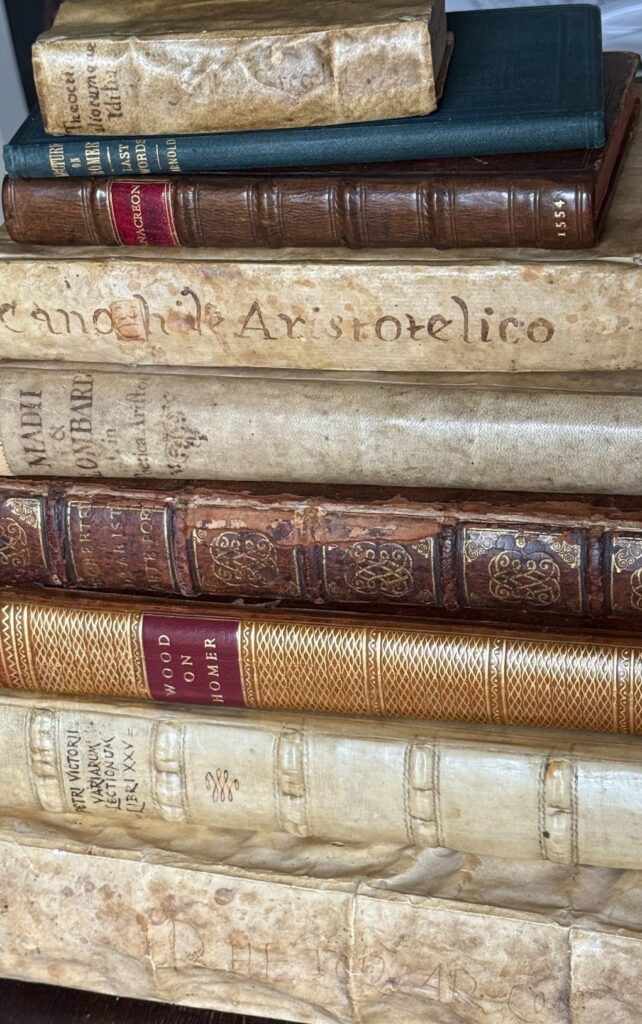
Spring 2026 has been a busy time for the CHS library as is true also throughout the year. We are now getting ready for the summer residential fellows and for readers who will utilize the library when teaching responsibilities are coming to an end for this academic year. During the summer the library will also try to catch up on the many tasks that have to take a back seat to assisting our spring and fall fellows and ordering and processing books. While several projects are in progress, some major tasks have been completed this spring.
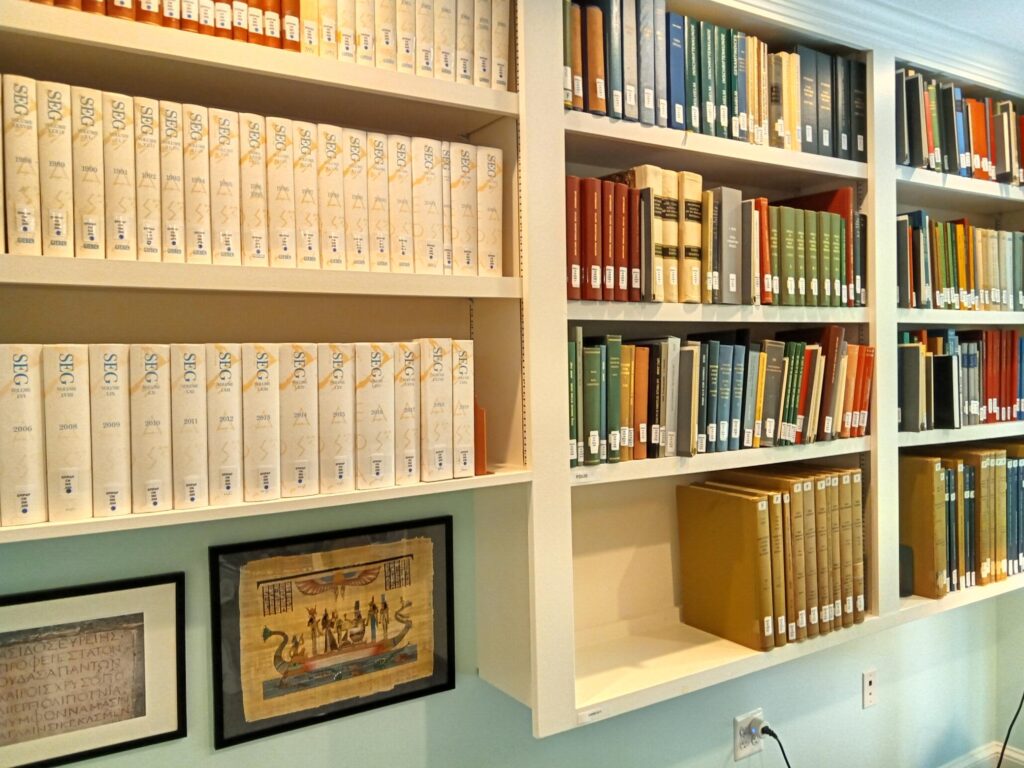
The Epigraphy & Papyrology Reading Room is now complete although new books will be added as they arrive.
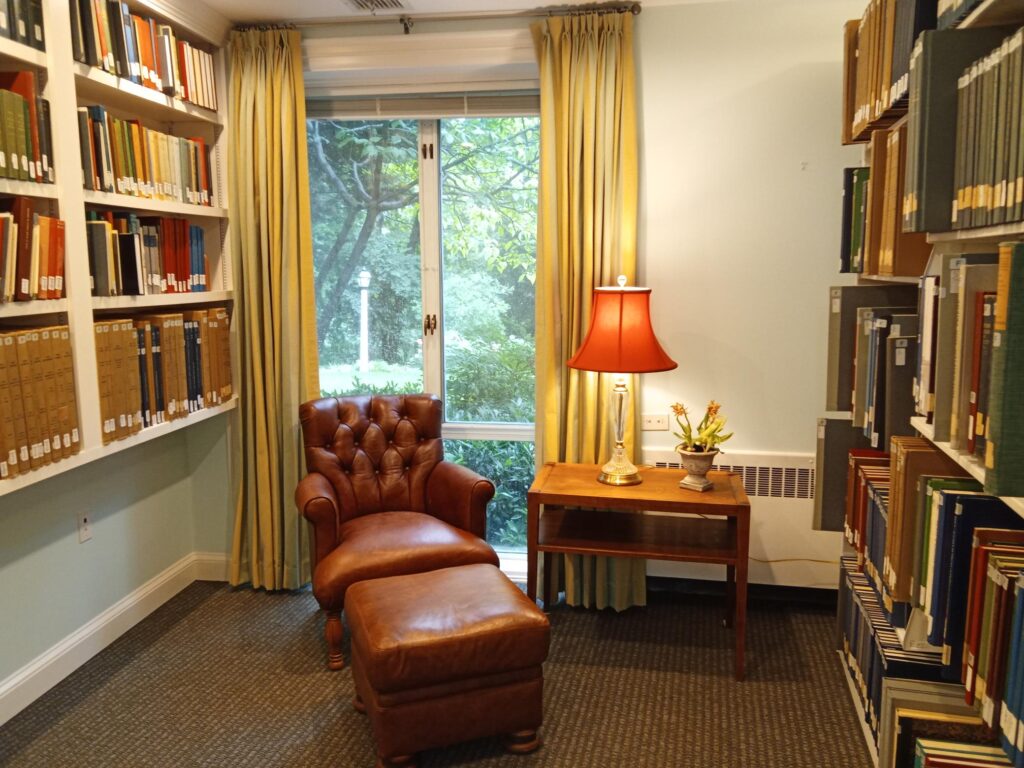
Sitting comfortably while examining inscriptions.
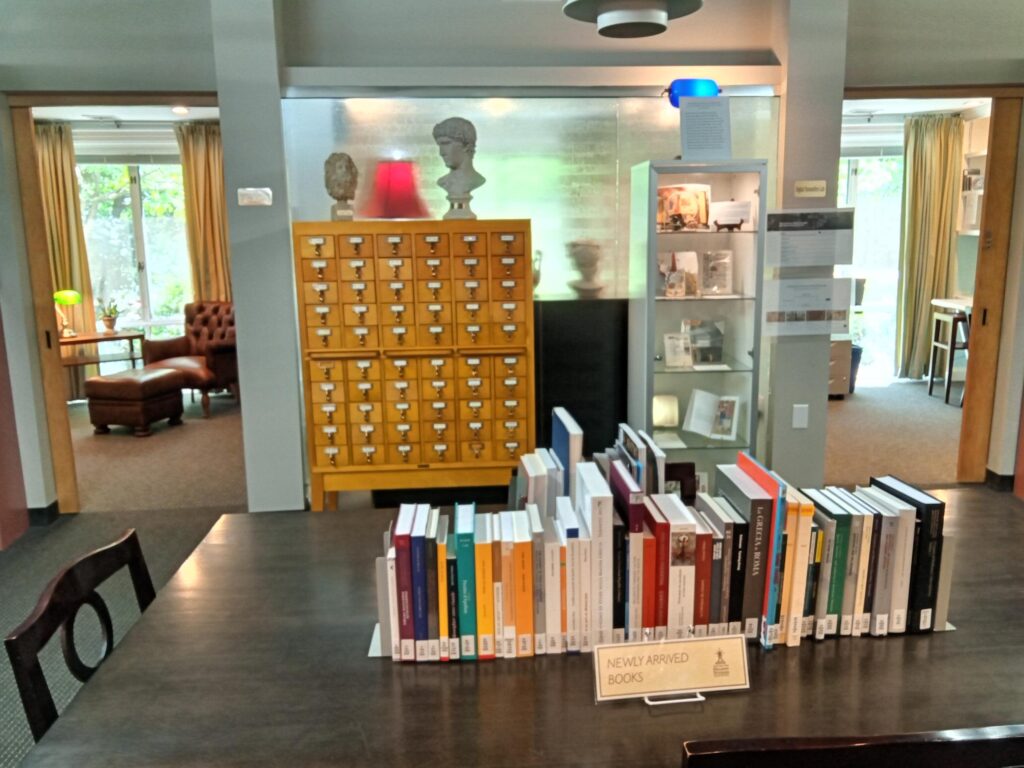
The New Books table with the old card catalog, the BoH manuscript display, and the entrances to the newly created Epigraphy & Papyrology Reading Room (EPIPAP) and Digital Humanities Lab (DHL).
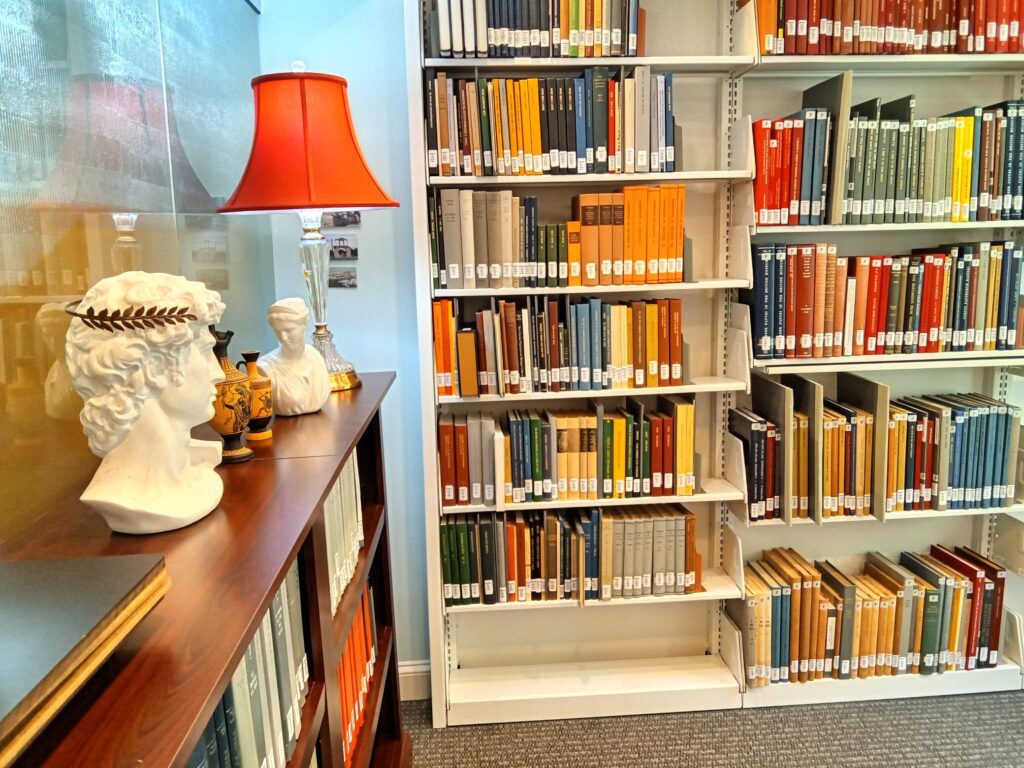
The CHS Papyrology Collection in its new location.
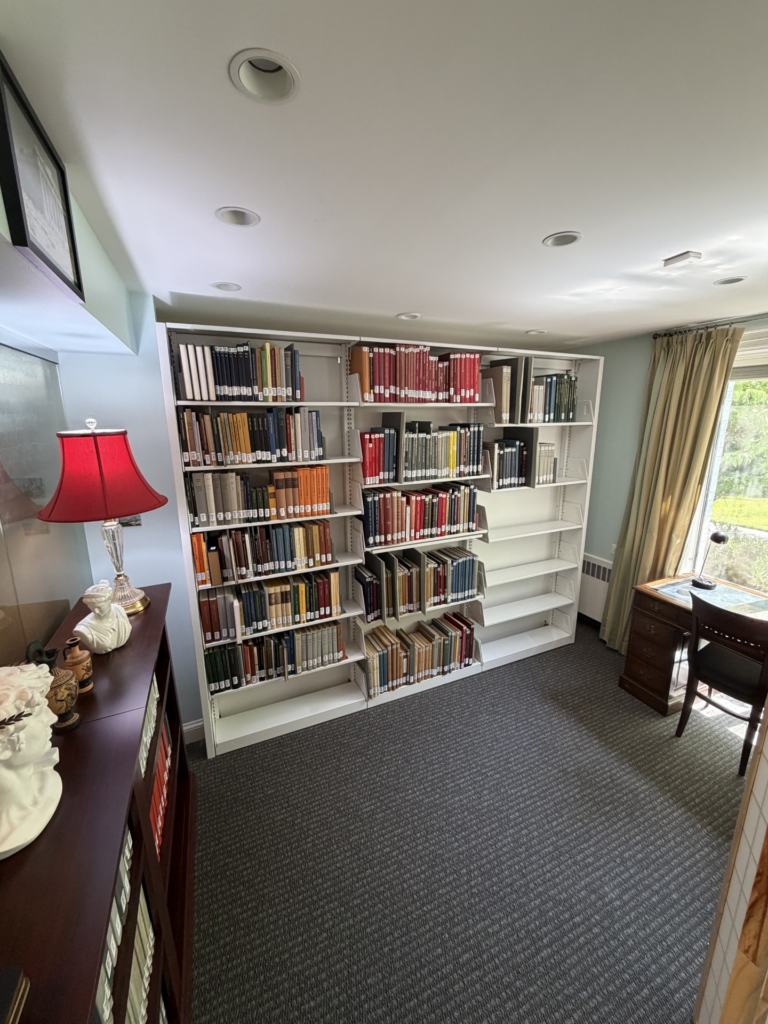
Due to the size of our epigraphy and papyrology collections, the EPIPAP room has become two. This is the “Papyrology Room” with desk facing CHS’s beautiful garden.
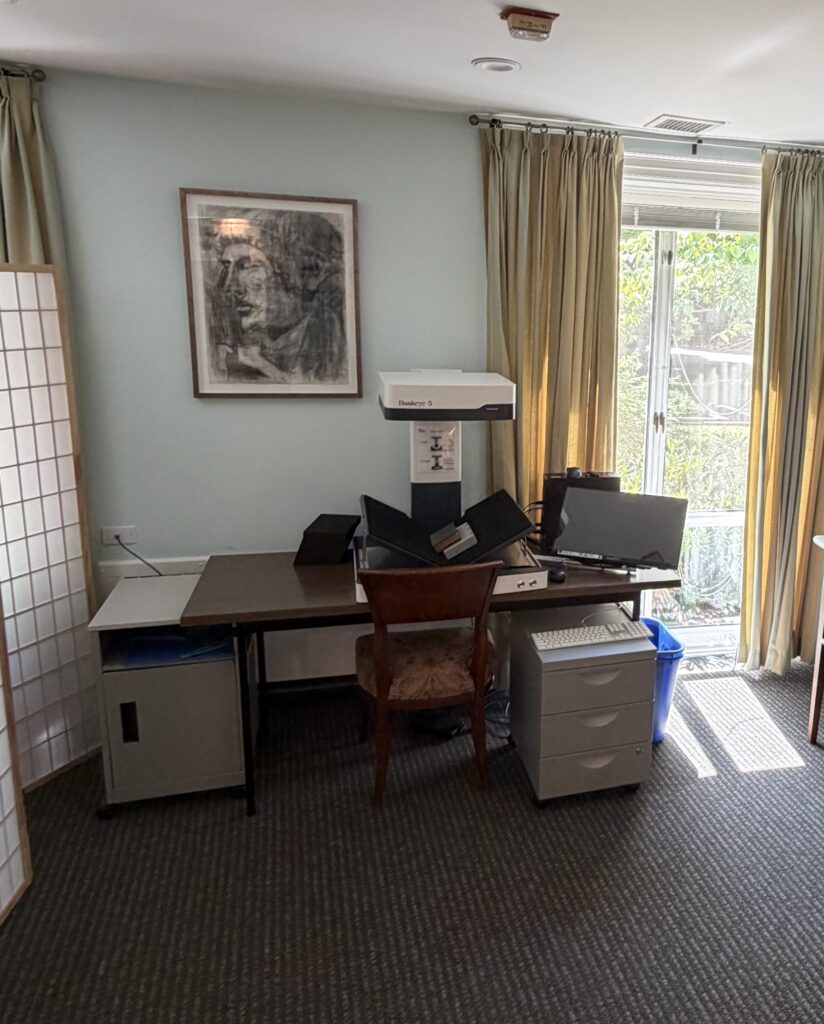
The Digital Humanities Lab with a top of the line scanner has been added to digitize our rare book collection which will gradually become accessible through CHS Digital, a manuscript and early printed book repository with annotation capability, conceived of by director Mark Schiefsky and executed by CHS’s IT consultant John Fletcher with several manuscript links and metadata contributed by the library. Also found in the lab are CD and DVD players for our CD and DVD collection. The CHS microfilm and microfiche collection is being converted to digital form and will eventually also be made available in CHS Digital.
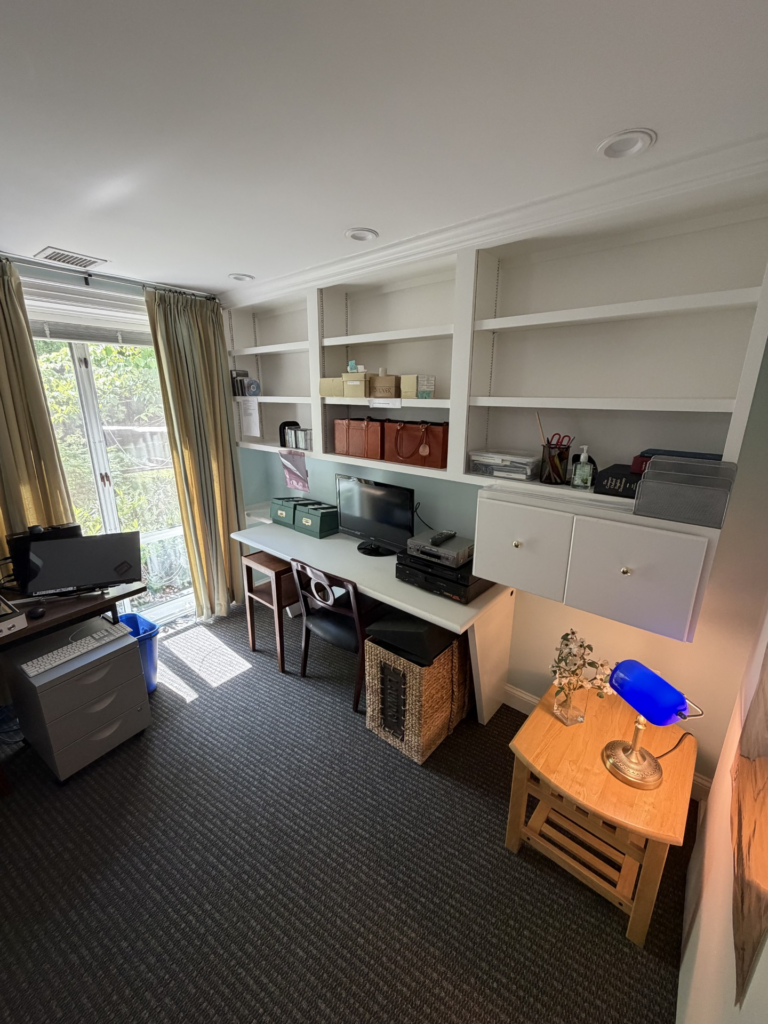
Watching and listening to the CHS DVD/CD collection have been made easier in a comfortable space.
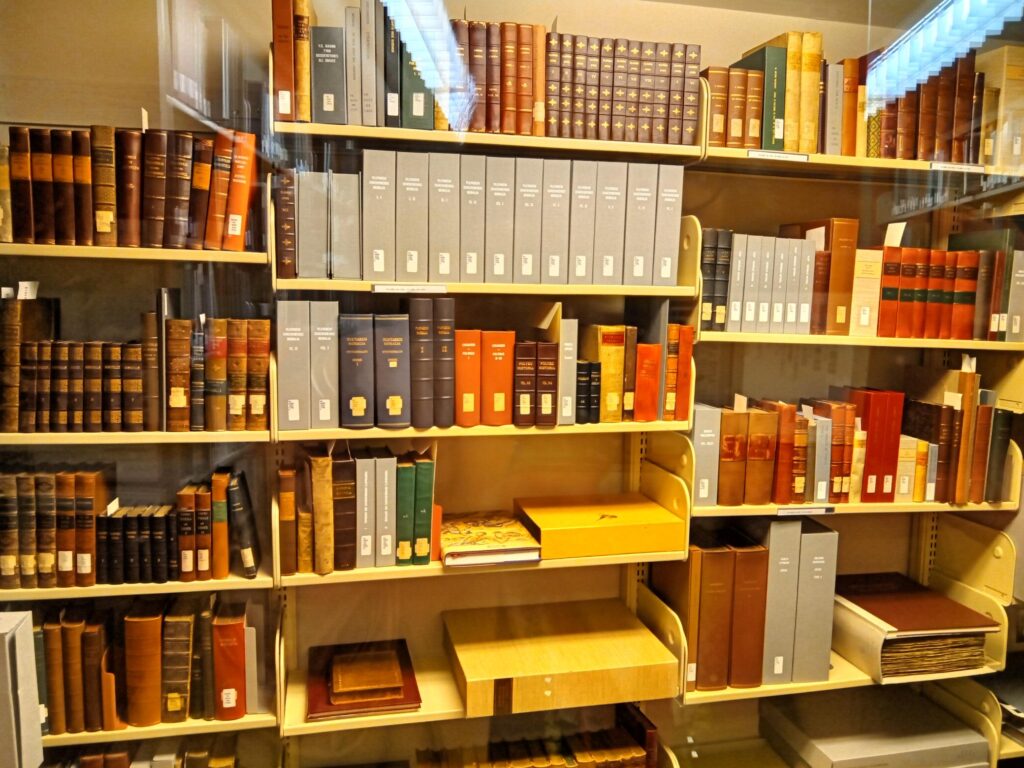
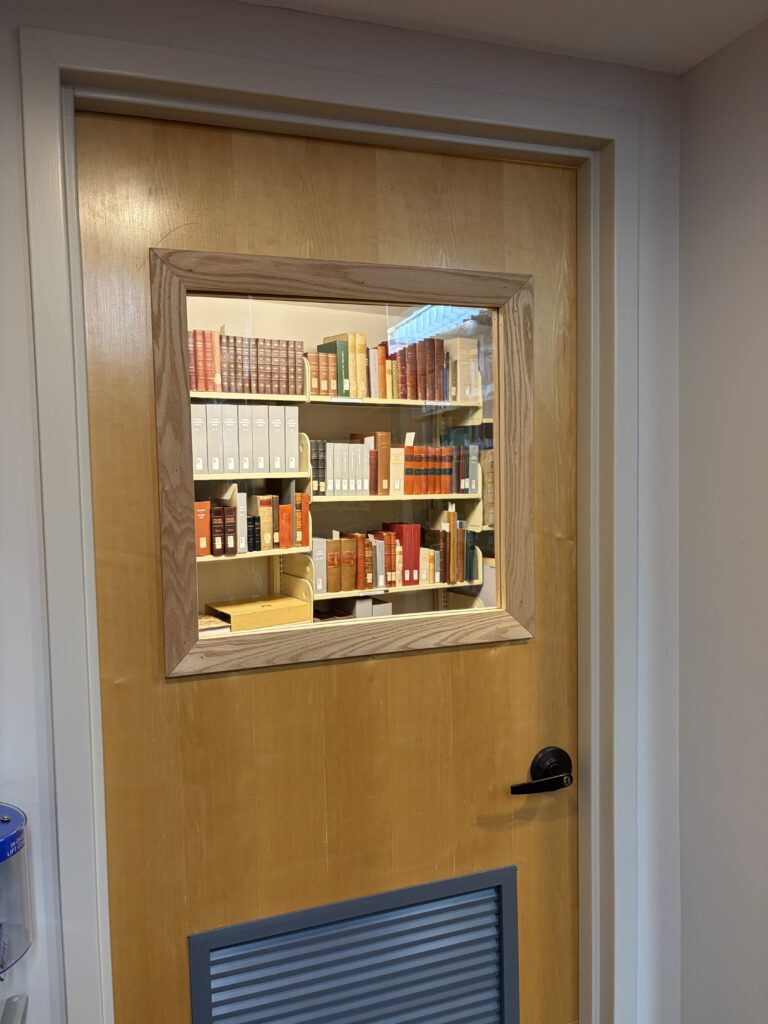
The Rare Book Room has been revamped and outfitted with a look-in window.
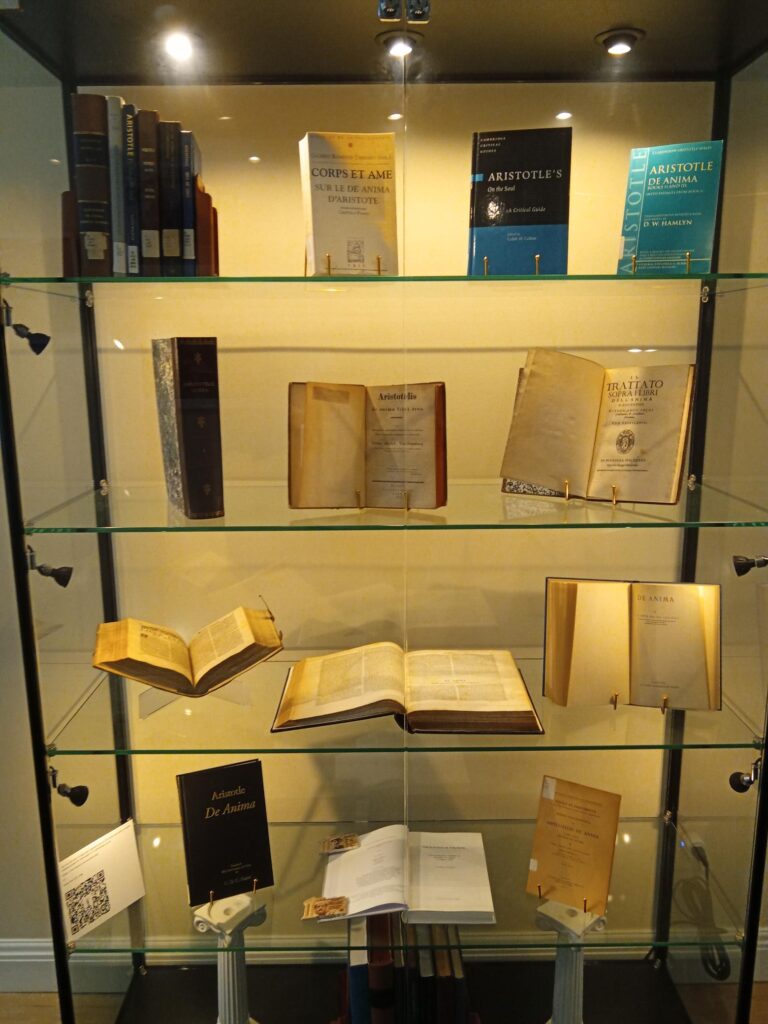
A new exhibit features various modern and antiquarian editions of Aristotle’s De anima in connection with a CHS workshop in June. A separate, though connected, display features the commentary of Alexander of Aphrodisias.
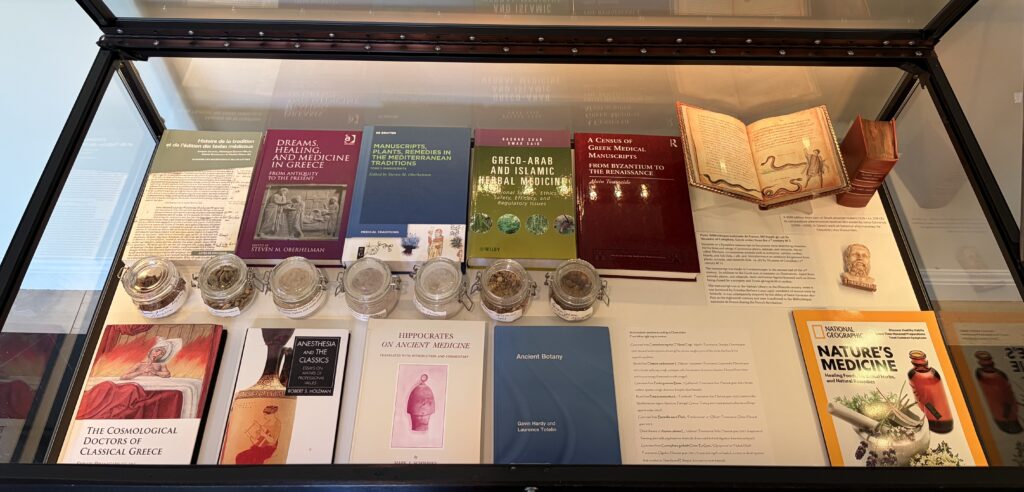
Another old-new exhibit features modern books on ancient medicine such as one on Hippocrates by CHS director Mark Schiefsky and a corpus of medical manuscripts by CHS associate Alain Touwaide incorporated in CHS’s MediManus (a searchable database conceived of by Mark Schiefsky and executed by content providers Alain Touwaide and Emanuela Appetiti and a technical team at CHS Greece, see an earlier blog post), a 1549 edition of Galen (De compositione pharmacorum localium libri decem Jano Cornario medico interprete), a facsimile of a manuscript in Paris (MS Suppl. Gr. 347) of the works of Nicander of Colophon from the 10th century, his pharmacological texts Theriaca and Alexipharmaca, in addition to herbs and spices described by Dioscorides such as Cardamom for epilepsy and cough, also to induce abortion, Myrrh for facial eruptions and chest pains, and Calamus for digestive disorders. These products were purchased from merchants in Africa and the Middle East by a lab in Prague to concoct ancient perfumes according to recipes found in writers such as Dioscorides and Nicander. They were donated to the CHS library by one of the scholars involved, Sean Coughlin, who we hope will conduct a workshop on the subject this summer as a joint venture with Dumbarton Oaks.
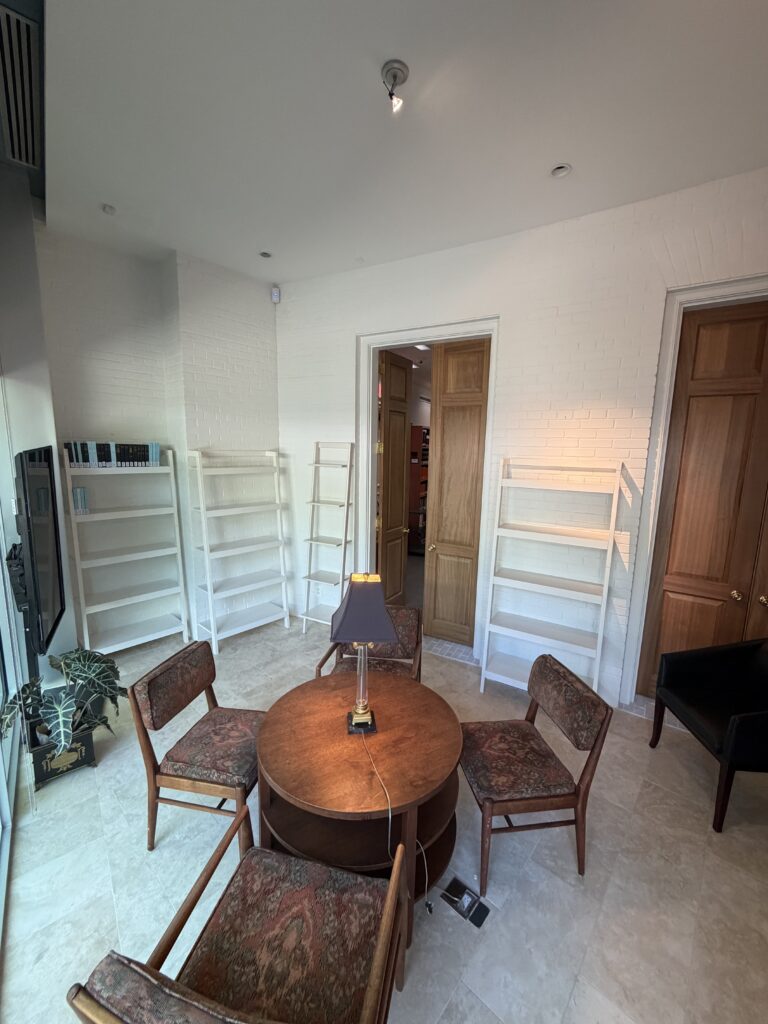
Another major project this summer and early fall will be to add reference copies of Greek OCT and Teubner editions in the Black Classicists Room.
“Smaller,” yet significant, tasks have included shifting collections, shelf-reading, correcting catalog records and journal lists, relabeling and changing locations, identifying, selecting, ordering, unpacking, cataloging, processing and (re)shelving hundreds of books, identifying many books in need of repair and sending some to Harvard’s Weissman Center and others to a private local conservator, processing many new reader requests and giving library orientations to groups and individuals, helping fellows and readers locate books and articles and other resources, and attending lectures and performances by invited scholars, artists, musicians, dancers, and our amazing fellows, also at the SCS conference in San Francisco where in addition to attending presentations also helping to staff the CHS publications booth, and, especially, organizing an evening of talks at the CHS to celebrate the donation of more than 30 extremely valuable rare book additions (see an earlier blog post).