Visit Us
Hours and Location Hours Monday-Friday: 9am-5pm Closed on federal holidays and from December 24-January 1 Address 3100 Whitehaven Street, NW Washington, DC 20008 Driving Directions Directions from Maryland (I-95 south) Follow Interstate Highway 95 to the Beltway (I-495) heading west toward Bethesda/Silver Spring. Take exit 39 for River Road, heading east towards Washington. Turn right onto Goldsboro […]
- 0
 Posted on
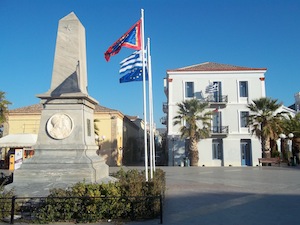
2020 Early Career Fellows in Hellenic Studies in Greece:
Ioanna Moutafi
The Bioarchaeology of the Early Mycenaean period: An interdisciplinary study of human skeletal remains from Ayios Vasileios (Laconia) and Kirrha (Phokis) Death is a social process, associated with a series of collective acts (a.k.a. mortuary practices), which do not passively reflect reality but rather involve re-definition of identities, personhood and social relationships. Therefore, by studying the […]
- 0
 Posted on
Body and Mind Seminar Fall 2020 with Dr. Ryan Harte, postdoctoral fellow at Southern University of Science and Technology (Shenzhen, China) | Challenging Mind-Body Dualism in Plato with the Phaedrus
Written by Alba Curry The Center for Hellenic Studies would like to extend their greatest thanks and appreciation to all of those who participated in the second meeting of the Body and Mind Seminar. We would also like to thank Dr. Ryan Harte for his talk, which aimed at complicated-straightforward mind-body dualism in Plato. Harte […]
- 0
 Posted on
CHS 2020 Fall Fellows:
Dieter Gunkel
Tonal Ochlophobia in Greek: Evidence from the Musical Documents As a linguist and philologist, I am interested in the accentuation of ancient Greek. I think of the accentuation of the language as a window that provides a view on a variety of things, including the linguistic evolution of Greek, the inner workings of its grammar, […]
- 0
 Posted on
CHS 2020 Fall Fellows: Aimee M. Genova
My project at the CHS, “In Times of War and Crisis: Regional Identities and Greek Archaeology,” offers a social-historical analysis of Greek archaeology by integrating the identity politics of Ottoman Macedonia and Crete into the broader, transnational narratives of Greek resistance prior to their unification in 1913. Although the London Protocol recognized Greece as an […]
- 0
Posted on
Body and Mind Seminar Fall 2020 with Dr. Tom Angier, University of Cape Town | Aristotle on Mind/Body, Male/Female, Master/Slave: The Relevance of Technē
Written by Alba Curry The Center for Hellenic Studies would like to extend their greatest thanks and appreciation to all of those who participated in the first meeting of the Body and Mind Seminar. We would also like to thank Dr. Tom Angier for his talk on the relevance of Aristotle’s conception of technē as […]
- 0