
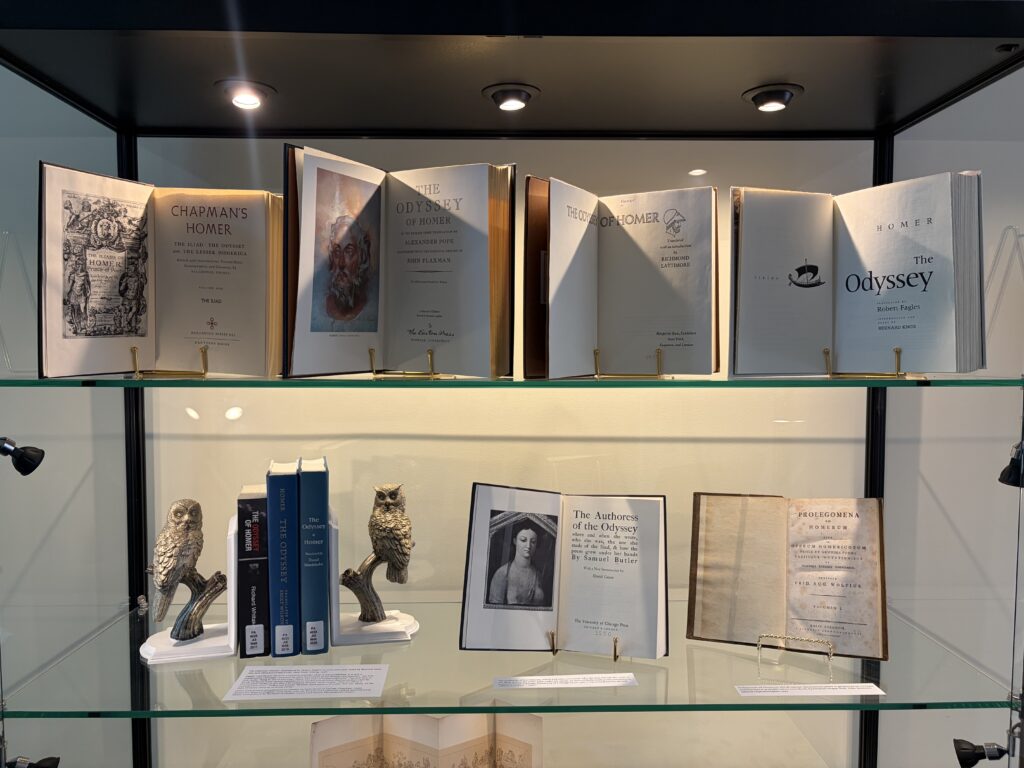
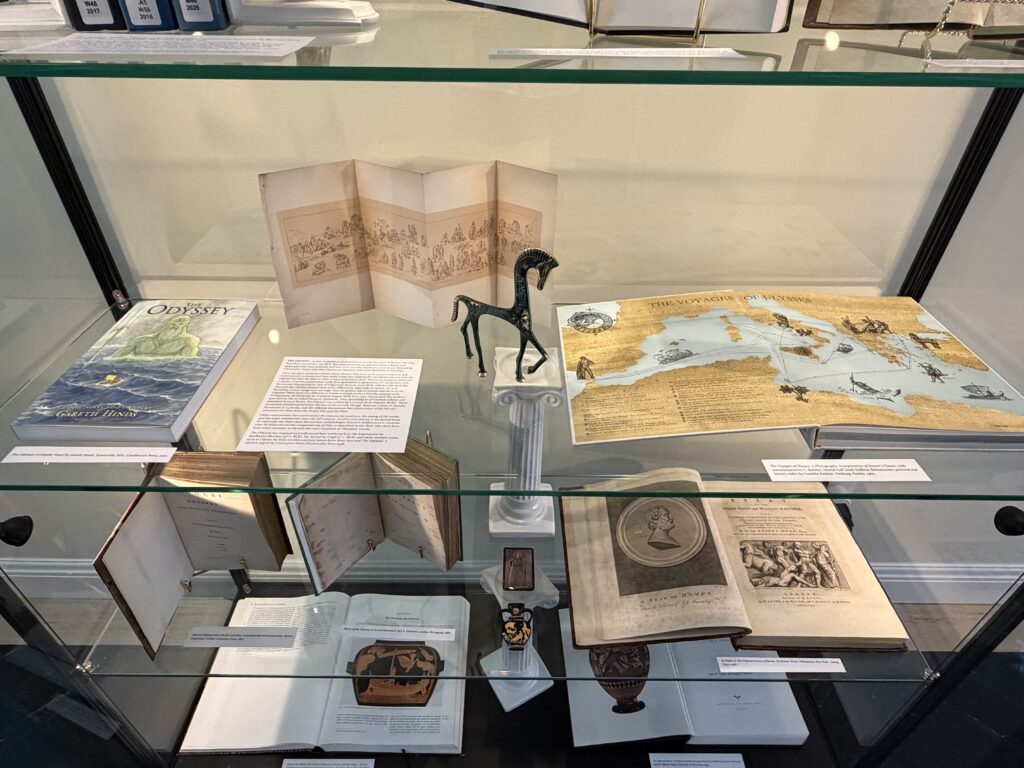
The CHS library possesses numerous editions of and critical works on the Odyssey, to piggyback on Jill Robbins’ post about CHS publications on this celebrated epic. Right now there is an exhibit in the lobby of the CHS featuring John Flaxman’s engravings with images from the Odyssey from 1793-1810, and English translations, both older ones such as those of George Chapman from 1616, Alexander Pope in English verse from 1725-26, and more recent ones such as that of Richmond Lattimore from 1965. Robert Fagles’ translation became extremely popular when it was published although it has been criticized by later translators for being somewhat fanciful. The first line reads: “Sing to me of the man, Muse, the man of twists and turns.” The first line of Emily Wilson’s more succinct translation in iambic pentameter, the translation used by Christopher Nolan in his film The Odyssey (2026), reads: “Tell me about a complicated man.” Ἄνδρα μοι ἔννεπε, Μοῦσα, πολύτροπον, literally: “Tell me, Muse, of the man of many-devices (or many turns),” presumably a reference to Odysseus’ duplicitous character, the man who devised the fateful “gift” to the besieged Trojans of a huge wooden horse. Besides Robert Fagles’ and Emily Wilson’s lauded translations from 1996 and 2017 respectively, those of Richard Whitaker, in South African dialect from the same year (2017), and Daniel Mendelsohn from 2025, are also included in the display.
Other interesting items featured in the exhibit include Friedrich August Wolf’s 1795 Prolegomena ad Homerum, the post-classical work that spurred the “Homeric Question” as Wolf argued that the Odyssey was written by a different author than the Iliad, and Samuel Butler’s 1897 arguments for identifying the author of the Odyssey as female, a woman from Trapani, Sicily, who, he says, lived ca. 1000 BCE. Also featured are The Odyssey: A Graphic Novel by Gareth Hinds from 2010 and An Essay on the Original Genius of Homer by Robert Wood from 1775.
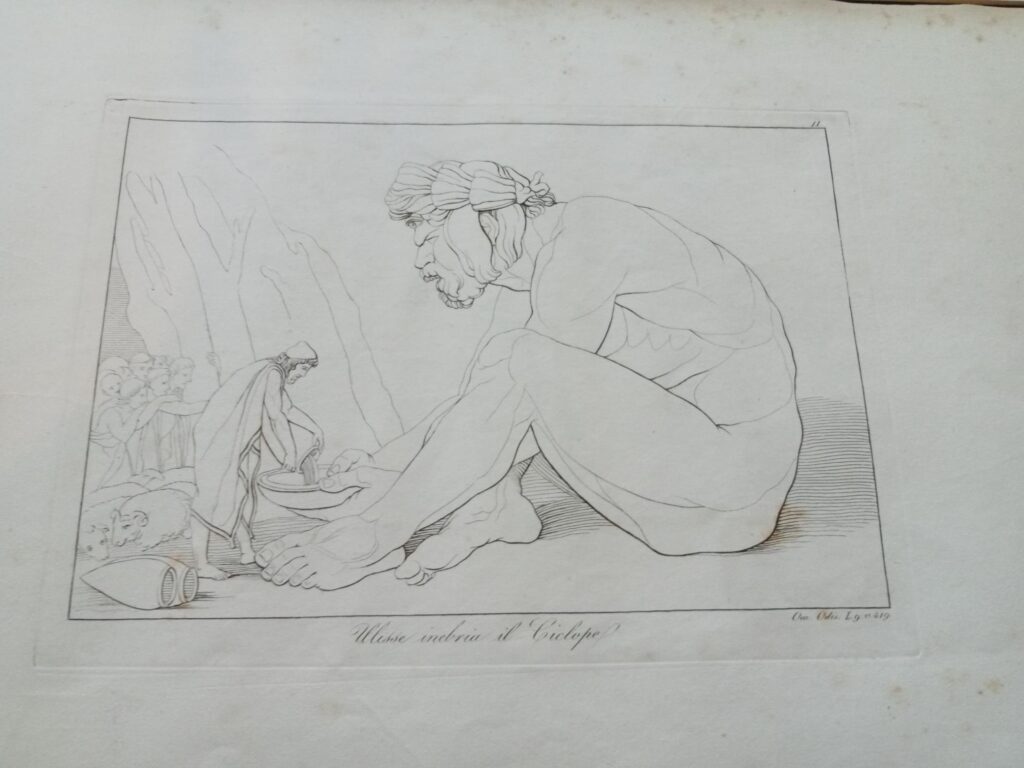
The one-eyed Cyclop Polyphemus and “No one” (Odysseus) from book 9. From John Flaxman’s 18th century engravings.
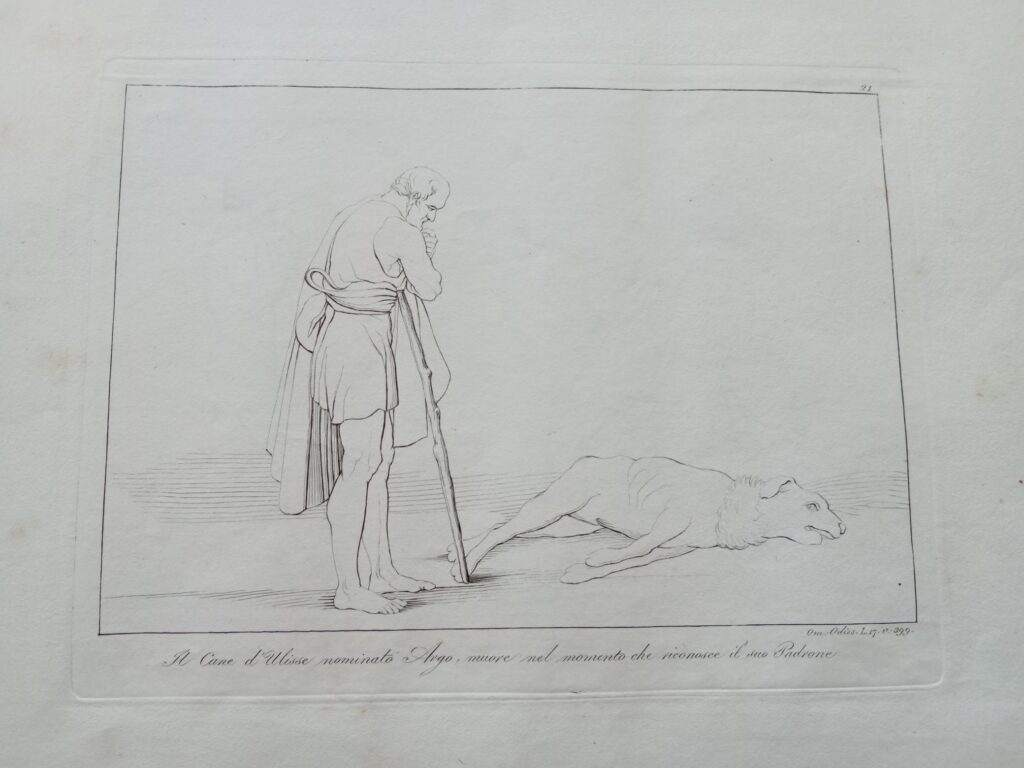
From book 17, Odysseus’ dog Argos who died after faithfully waiting for his human for 20 years can finally rest after seeing Odysseus return. Naturally, Argos did not need proof that the man dressed as a beggar was his human.
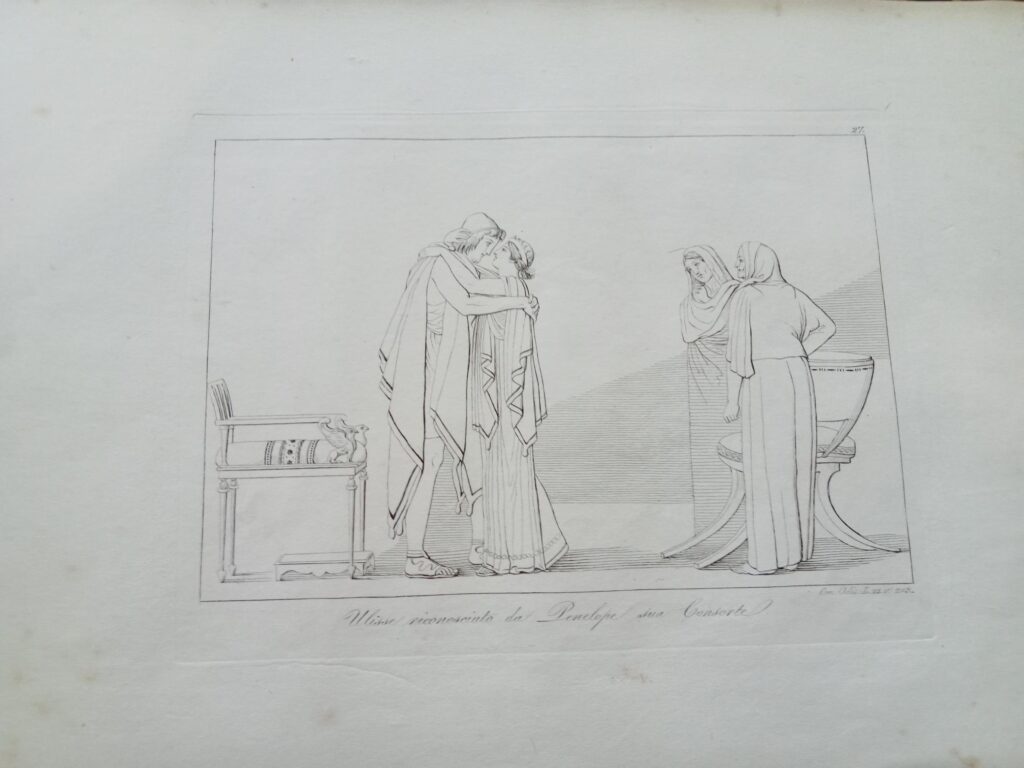
The reunion of Penelope and Odysseus in book 23.