
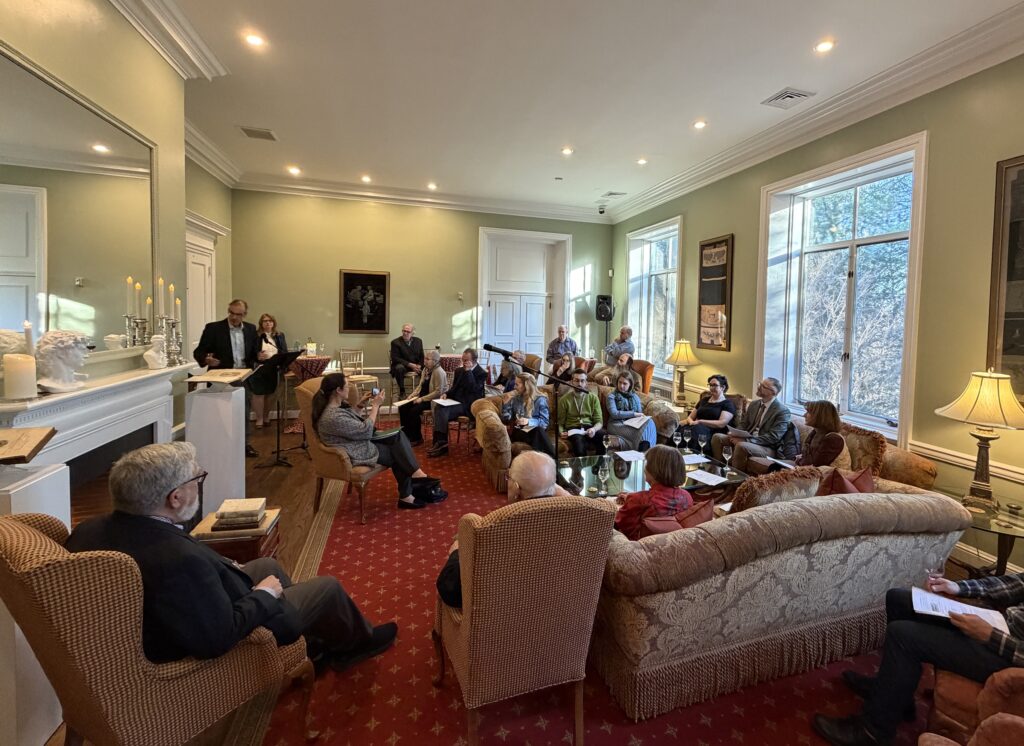
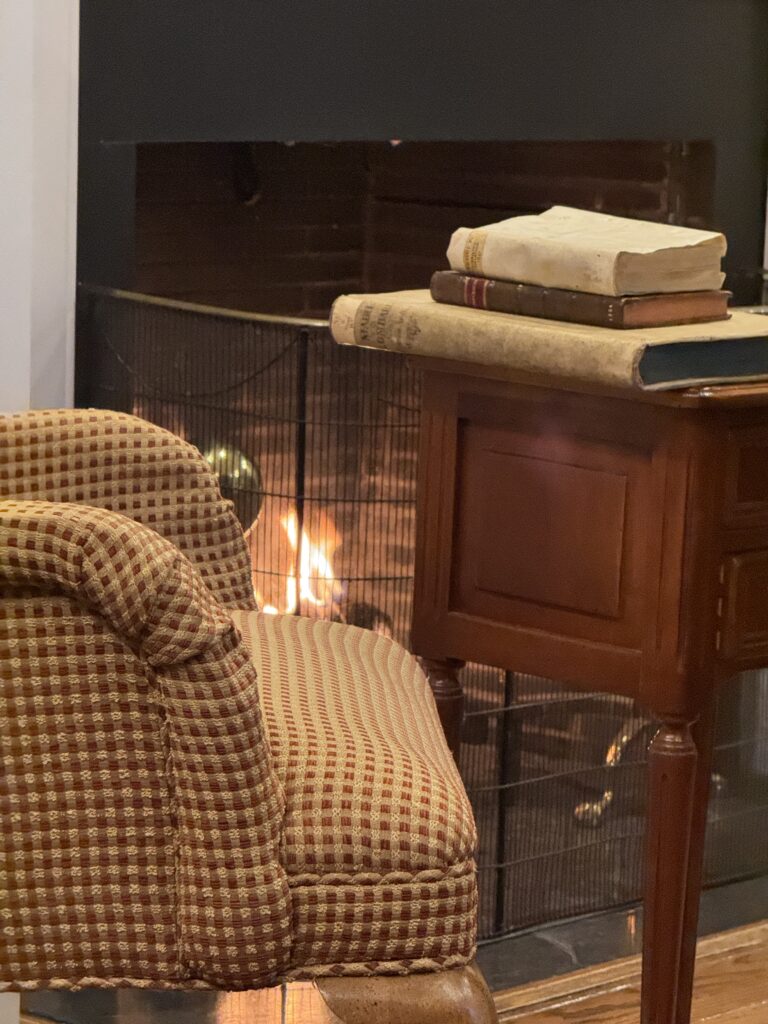
Bibliophiles of various ages and backgrounds gathered at the Center for Hellenic Studies for “a literary salon” in the Center’s Common Room to the sight and sound, scent and taste of a cozy fire place, flickering candles, wine, and an abundant table of dolmades, spanakopites, tzatziki, sweets, and more to listen to Anthony Grafton, Henry Putnam University Professor of History, Emeritus, at Princeton University, and Déborah Blocker, Professor of French and affiliated faculty in Italian Studies at UC Berkeley, discussing books from the 16th to the early 20th century from a collection of 32 rare books, donated by John Van Sickle, CHS Senior Fellow 1974–75, and Gail Levin.
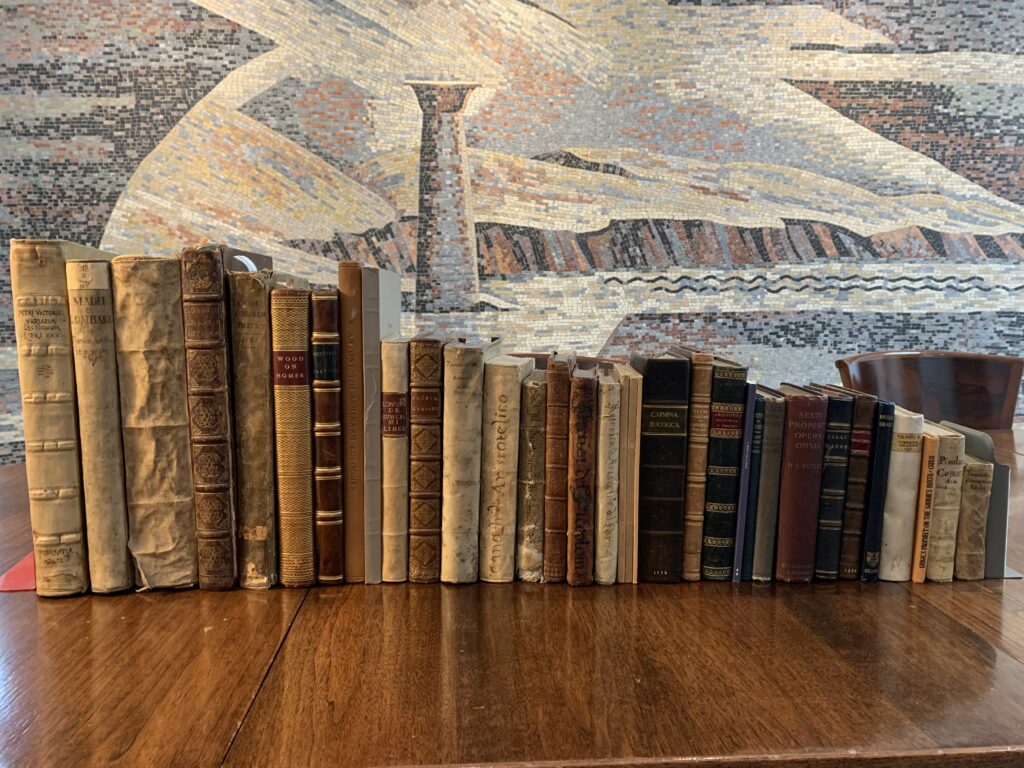
Some highlights from the collection include an Estienne (Stephanus) first edition of Anacreon from 1554, a Robortello edition of Aristotle’s Poetics from 1610, a Vettori (Victorius) edition of Aristotle’s Rhetoric from 1548, a Frischlin and Estienne edition from 1577 of Callimachus’ Hymns, an Aldus Manutius first edition from 1513 of works by Callimachus, Pindar, and Lycophron, a 1692 French translation by Sieur André Dacier of Aristotle’s Poetics (incidentally, the library owns his wife Anne’s influential translation of the Iliad from 1711), an Estienne edition from 1579 of Theocritus’ Idylls with a parallel Latin translation by Hessus, and more.
The Director of the CHS, Harvard professor Mark Schiefsky, welcomed the guests and thanked the donors:
I would like to say a few words about why I think the Center is the perfect home for John van Sickle’s and Gail Levin’s remarkable collection.
The CHS was founded in 1960 by a group of visionary philanthropists and educators who believed in the power of the humanities to enrich and sustain American society. In particular, they felt that a center dedicated to the study of the literature, poetry, and philosophy of ancient Greece would best realize their goal of reengaging with the humanities at a time when America was gripped by the Cold War and the arms race. For more than sixty years the Center has worked to realize their original vision, hosting hundreds of scholars on our campus and providing them with uninterrupted time and support for research. These fellows of the Center – among them, of course, John van Sickle himself – have produced pathbreaking work in the study of ancient Greece that has contributed immensely to our understanding of that remarkable culture.
Our Center has been animated since its inception by a broad-based commitment to humanistic study that draws on the disciplines of philology, philosophy, literary criticism, natural science, and more. And this spirit was shared by many of the people who produced the works in the van Sickle and Levin collection. Here they will find a home where new generations of scholars can engage and carry on the kind of work that stimulated their original production centuries ago. John and Gail, your books have arrived in a place where they will be cherished and used by scholars, we hope for centuries to come. On behalf of the Center and of all the scholars who will enjoy the benefits of your generosity in the future, I thank you most warmly.
Rebecka Lindau, chief librarian, introduced and thanked the guests of honor and the speakers, and thanked Director Mark Schiefsky for making the event possible, and for the many library efforts proposed, led, and supported by him such as the acquisition of a high resolution scanner, and, with regards to special collections, the digitization of rare books, including the donated ones, the conversion of microfilm and microfiche of rare books to digital form, the inclusion of the Center’s digitized special collections in CHS Digital, the brain child of Professor Schiefsky, a database allowing for annotations in real time, and MediManus, a searchable database of ancient Greek medical manuscripts, also conceived of by Professor Schiefsky, and the acquisition of facsimiles of important medieval and renaissance manuscripts of ancient Greek texts.
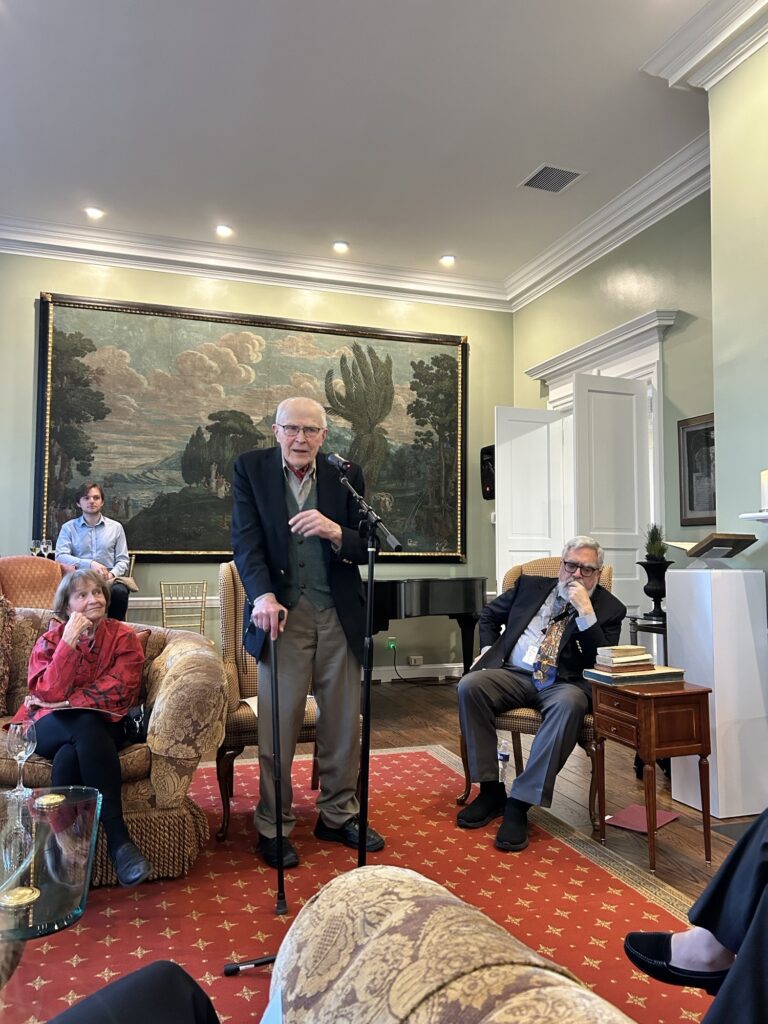
Professor John Van Sickle, Brooklyn College CUNY, and senior fellow at the CHS 1974-75, described how he acquired some of the antiquarian tomes.
Professor Van Sickle’s recollections in full with notes and bibliography:
Also in the photo are Arthur Harris, CHS residential fellow spring 2026, Livezey More, another donor of books to the CHS, and Anthony Grafton.
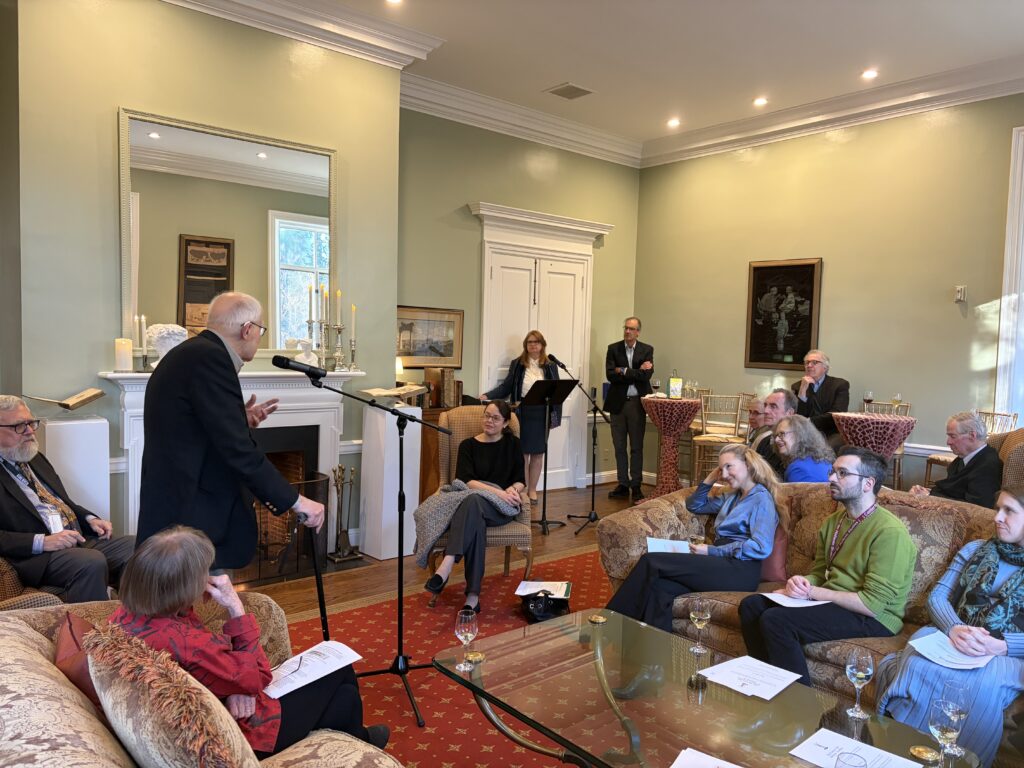
John Van Sickle also reminisced about his more than 50 years of teaching at Penn, Brown, the Intercollegiate Center, and Brooklyn College. He is turning 90 in September and announced his retirement as recently as this year.
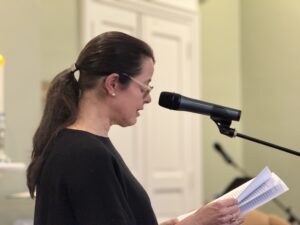
Déborah Blocker’s presentation focused on the transmission of Aristotle’s Poetics and a case study of André Dacier’s 1692 French translation and apparatus criticus, one of the books donated.
Abstract:
This presentation opens with general remarks on the transmission of Aristotle’s Poetics, as reflected in the Van Sickle Collection, drawing on several volumes that will be on display. The overview is followed by a brief case study of André Dacier’s 1692 French translation and commentary. Dacier’s Poétique d’Aristote, published “avec des remarques“, has received relatively little scholarly attention, yet it offers valuable insights into the creation of new readerships for Aristotle’s text — and into the evolving position of the “critic”. By combining a learned philological/philosophical approach with an effort to fashion a poetics accessible to cultivated but non-specialist readers, Dacier’s work helps illuminate the role such publications played in shaping the cultural authority and appeal of Aristotle’s Poetics in the early modern period. Dacier’s text and his trajectory as a scholar also exemplify the role played by political patronage in this process.
Professor Blocker’s talk in full with footnotes:
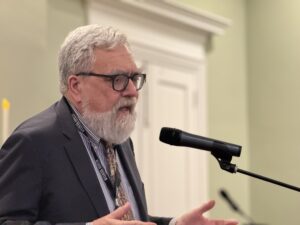
Anthony Grafton’s presentation focused on early printers of classical works in the Renaissance and was entitled “Some Monuments and their Meanings: The Van Sickle Donation and the History of Classical Scholarship.”
Abstract:
The wonderful books, ancient and modern, that John Van Sickle has given to the Center for Hellenic Studies can be read in many ways. Some of them were composed by scholars who are still known in the history of classical scholarship—from Henri Estienne and Pier Vettori, more recognizable as Henricus Stephanus and Petrus Victorius, to Robert Wood and Ulrich von Wilamowitz-Moellendorf. To hold the books is to gain a flavor—and sometimes to get hooked on the challenge—of these scholars. Some of them, like Fulvio Orsini’s book, exemplify transformations in the practice of classical philology—in his case, the origins of the comparative study of Virgil and his Greek sources which would develop over centuries to come. Still others—such as the works of Giulio Cesare Scaligero and Matthew Arnold–illustrate larger stories about classical literature and its afterlife. A few others are mysterious—and perhaps to all likely readers except John Van Sickle. No ancient writer is more prominent in this collection than Aristotle. After looking very briefly at some highlights of the collection, this lecture will discuss what these books can teach us about the culture of sixteenth century Europe, a world in which scholarship and literature, philosophy and philology regularly intersected and interacted.
Professor Grafton’s talk in full with footnotes and with handout below:
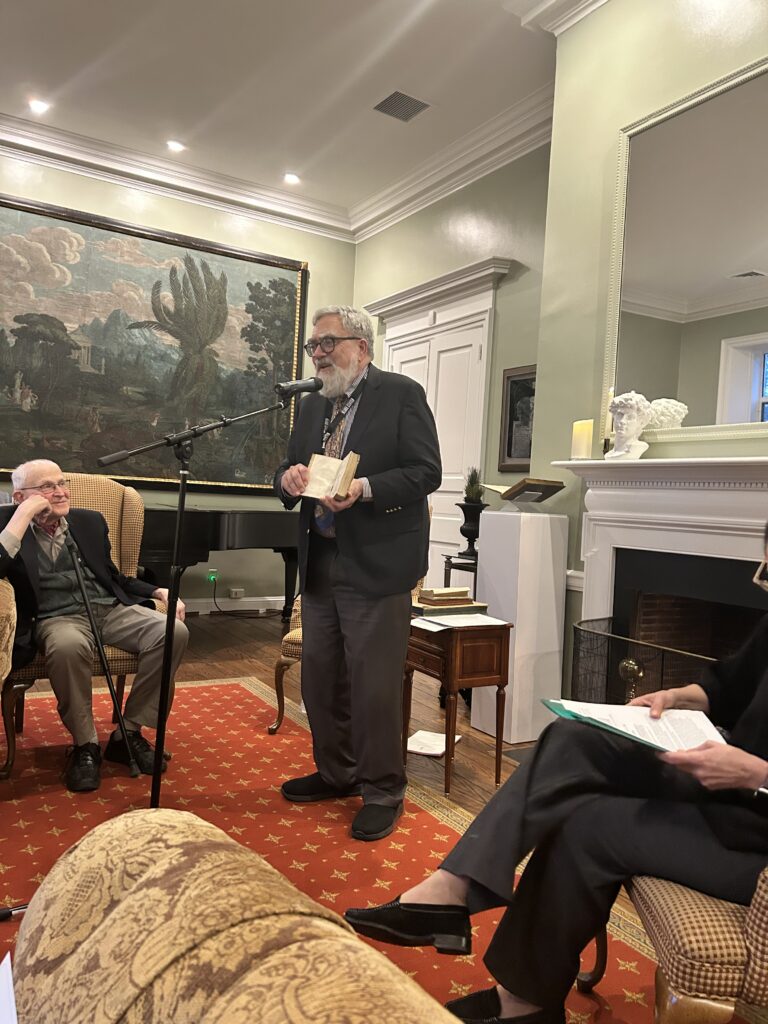
Professor Grafton and a show and tell of an Aldine 1513 editio princeps Pindar volume to the delight of John Van Sickle and the other guests.
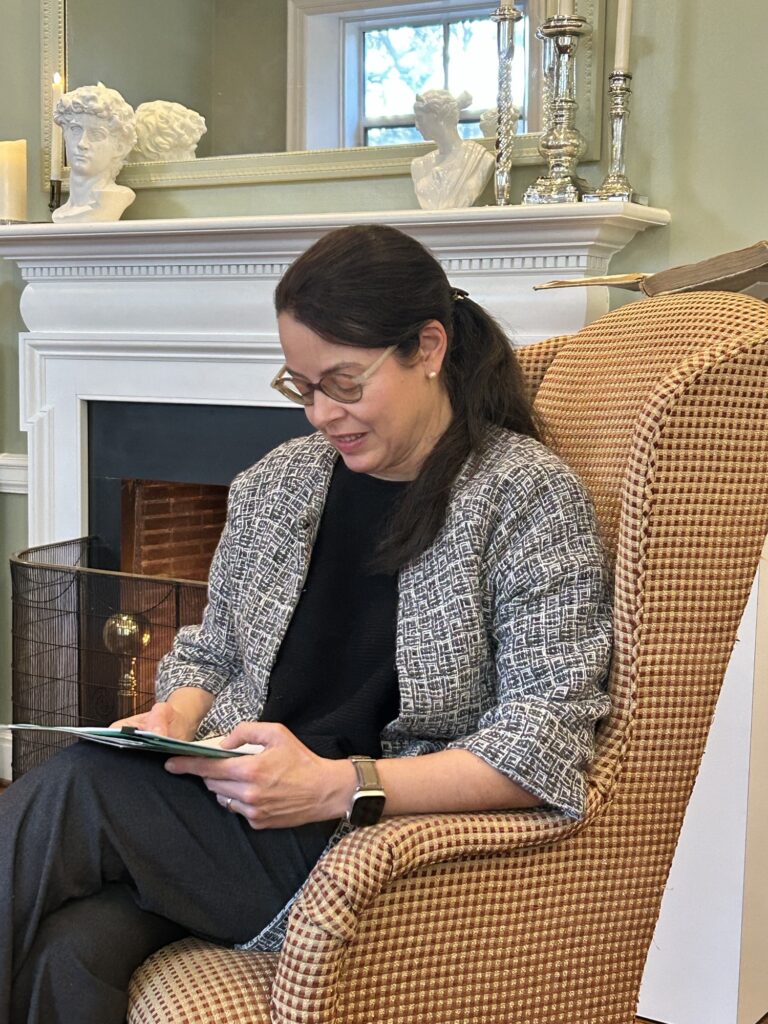
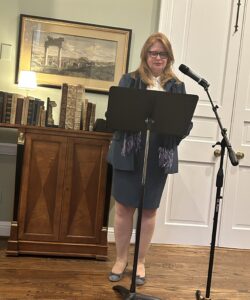
Déborah Blocker checking her notes in preparation for her talk.
Professor Blocker expertly answering questions from the audience.
The inimitable Anthony Grafton.
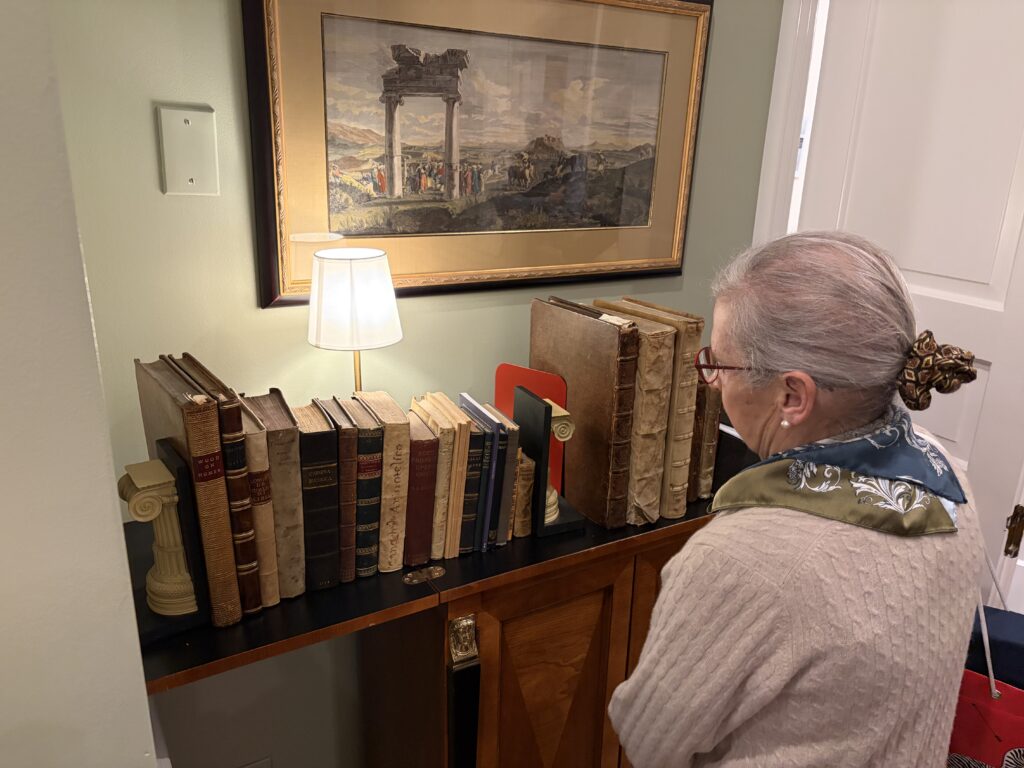
Book conservator Angela Scott admiring the rare book donation.
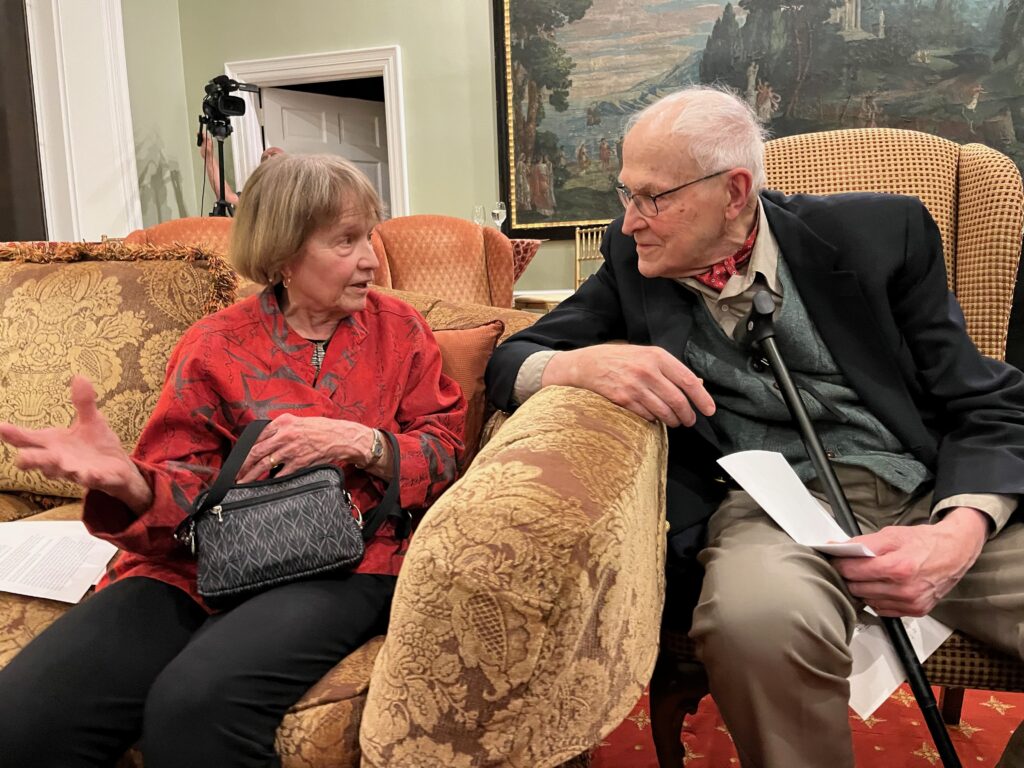
Livezey More and John Van Sickle, donors of books to the CHS library. Both John Van Sickle and Livezey More’s late husband John H. More were Professors-in-Charge at the Intercollegiate Center for Classical Studies in Rome (“Il Centro”).
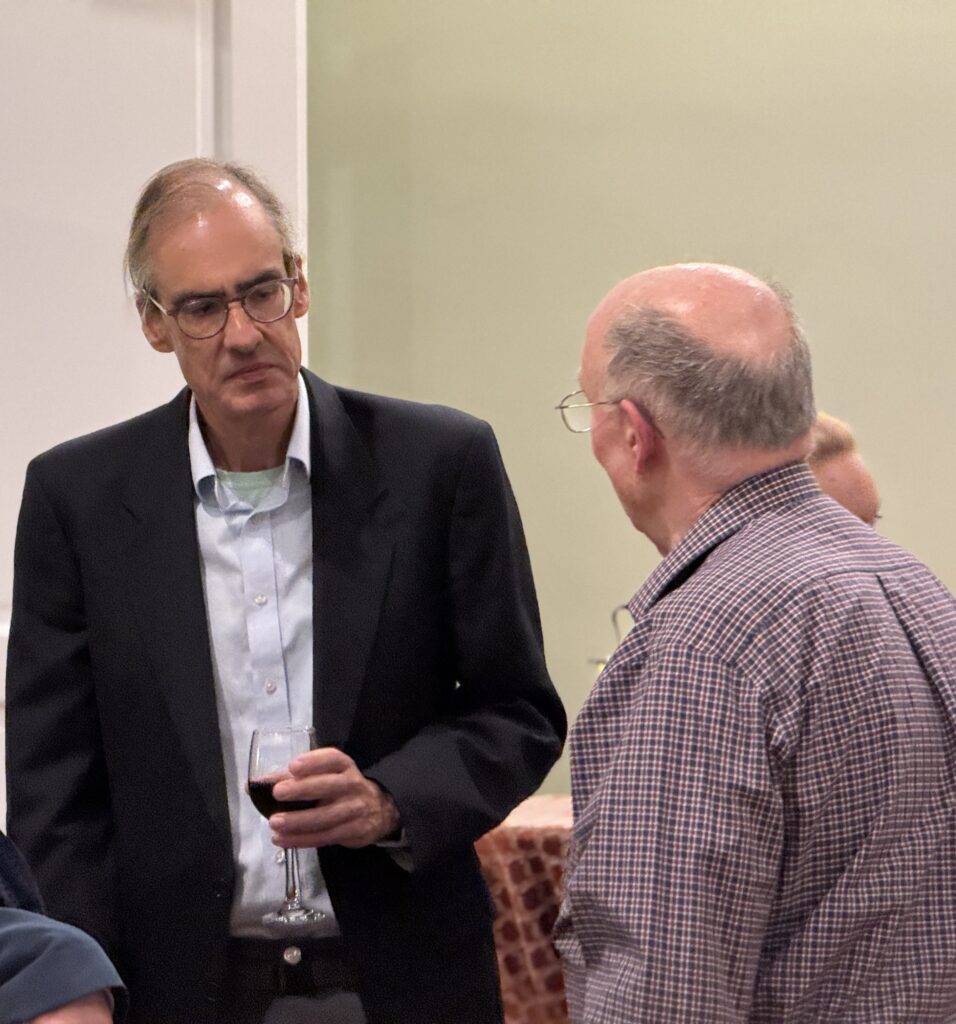
CHS Director Mark Schiefsky and CHS’s former librarian of 28 years Thomas Temple Wright in conversation about their mutual passions — books, ancient Greece, and cats.
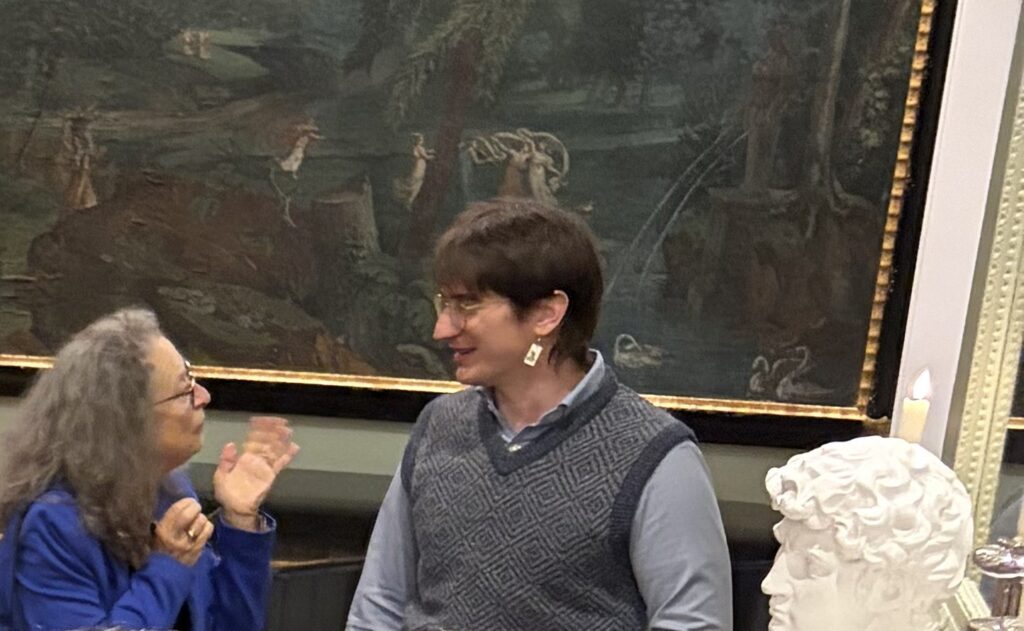
Emanuela Appetiti, scholar of ancient medicine and anthropology, and Ryan Pasco, CHS Associate Director of Fellowships and Academic Programs, in intense conversation (with David listening in) in front of CHS’s grand piano and a painting of the Elysian Fields, a perfect setting for an intellectual salon.
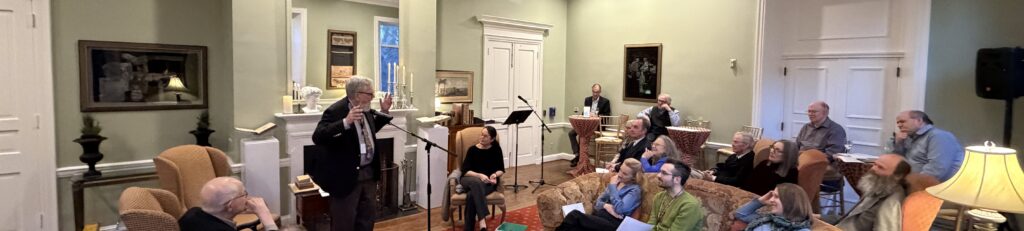
Seated on the sofa from left to right are current residential fellows Bridget Brasher, Lorenzo Ronchini, and Lindsey Mazurek. Behind them, seated on chairs, are Alain Touwaide and Emanuela Appetiti, scholars of ancient medicine and manuscript studies. Behind them, seated on armchairs are Gail Levin, art historian and the donor together with her husband John Van Sickle, and Joshua Robinson, Byzantine studies scholar and librarian at Dumbarton Oaks. Behind them, on tall chairs, are CHS Director Mark Schiefsky, Daniel De Simone, antiquarian bookseller and former rare books curator at the Folger library, Hellenist and former CHS librarian Temple Wright, and Gil Renberg, lecturer of classics at Howard University and a regular CHS library reader.
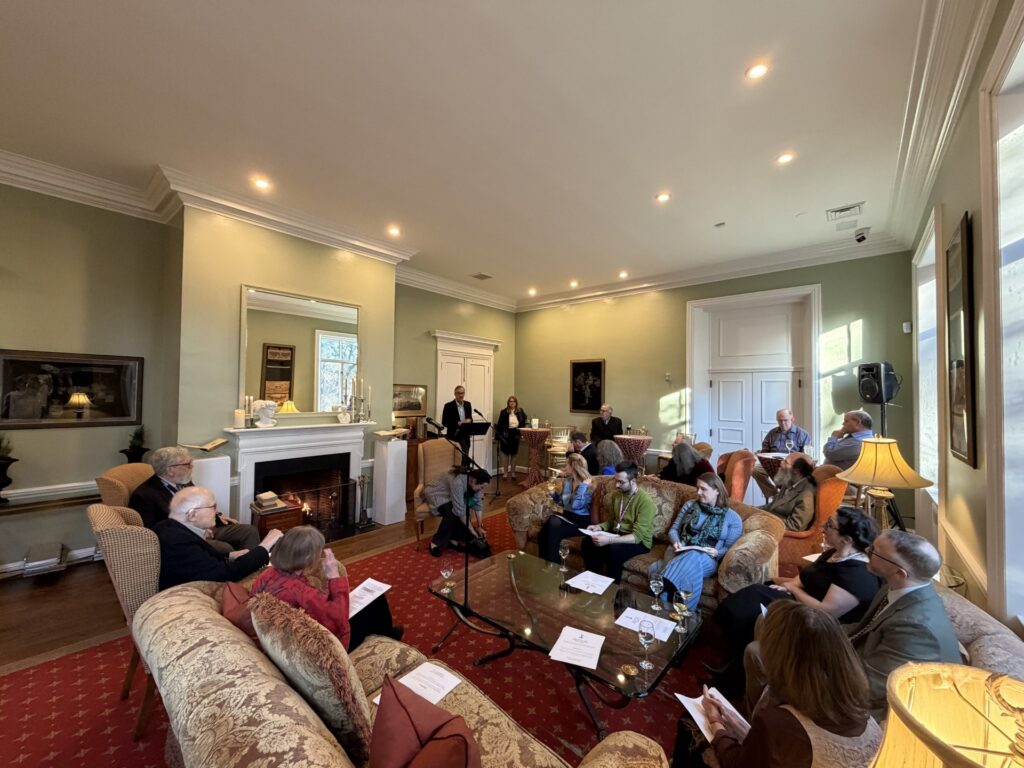
On the sofa to the right are Liv Mariah Yarrow, Chair of the classics department at Brooklyn College, and landscape designer S. Daniel Ackerman.
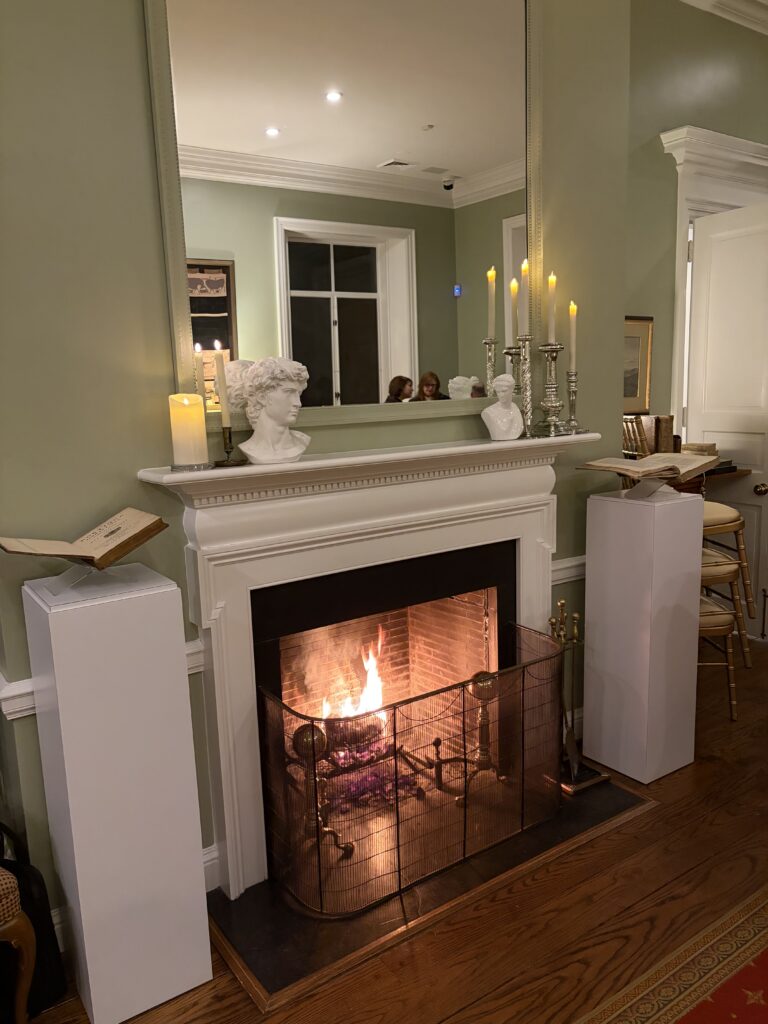
A crackling fire place, flickering candles, early printed ancient texts, and the company of book lovers and humanists, what could be better?
Seen through the mirror, Zoie Lafis, the Executive Director of the CHS, Rebecka Lindau, the chief librarian, and Temple Wright, the former CHS librarian, stealing a quiet moment towards the end of the evening.
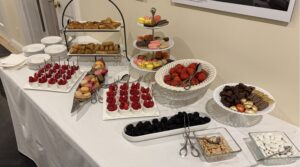
The guests were treated to Greek finger foods (μεζεδάκια), a large assortment of vegetables, fruits, and cheeses, and an attractive dessert spread.
The event was organized by the Library in cooperation with Events. Special thanks go to Director Mark Schiefsky, Executive Director Zoie Lafis, and Director of Hospitality and Facilities Ruth Taylor and her staff Luc Bouchard, José Marquez, Ada Resendiz, Kelly Navarrette, Jenny Flores, Maria Ramirez, and technician Doug Molina.
All external parties featured in the photos have given their permission to post.
Audio file of the presentations.